
The complete guide
HB3 9005 LED Headlight Bulbs, A Buyer's Guide
The problem this set solves
You open the bonnet, pop off the dust cap, and find a bulb that puts out a flat yellow pool of light. It works, more or less. It just looks tired, and on a vehicle you have spent real money and real weekends on, tired light spoils the whole effect.
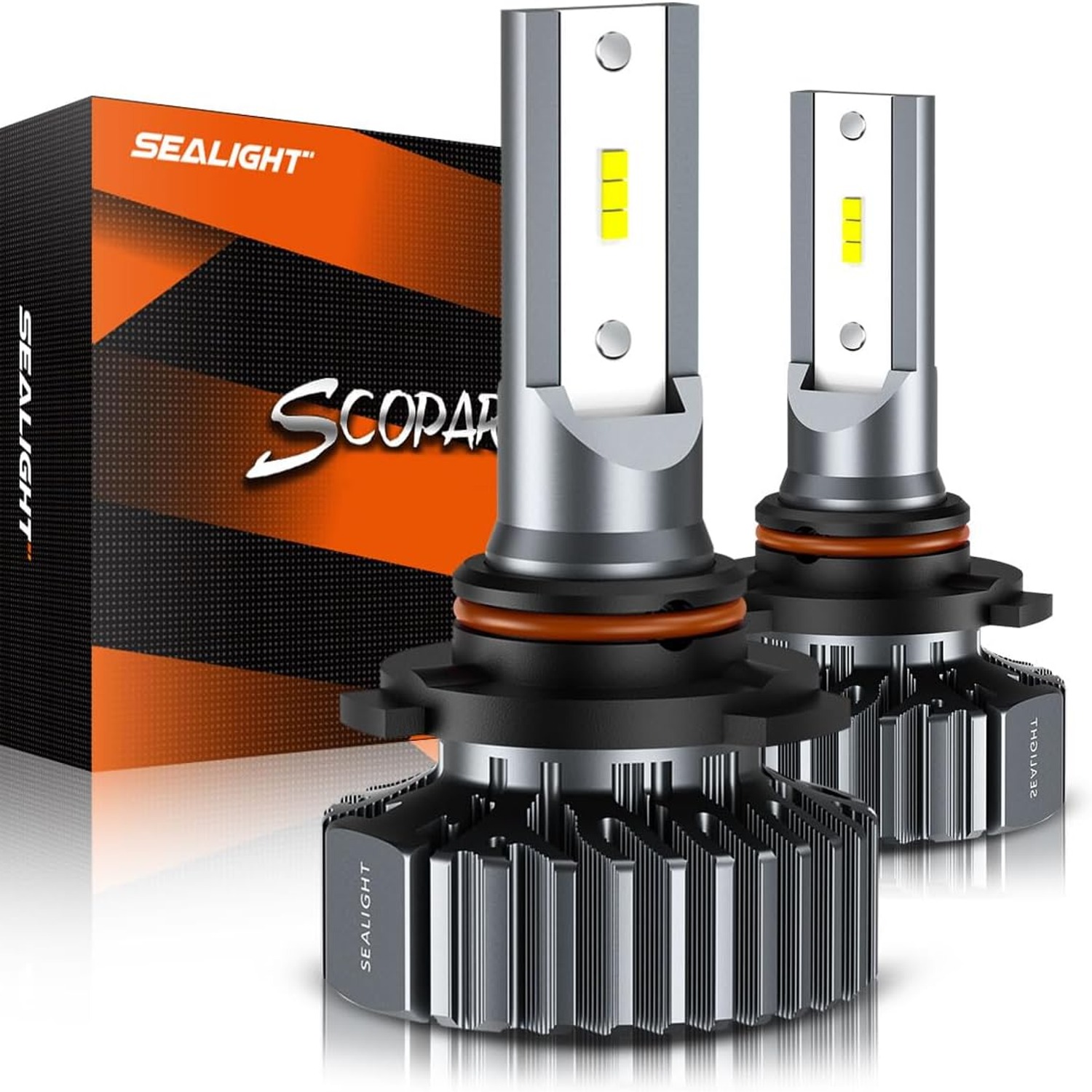
That is the gap this pair of HB3 9005 LED headlight bulbs fills. Two bulbs, one common fitting, a cool white 6500K colour, and a build with no fan in it. It is a straightforward swap for anyone whose housing takes the HB3 base.
Before anything else, the important bit. In the United Kingdom, fitting LED bulbs into headlights that were designed around halogen bulbs is generally not permitted on public roads. This set is sold for off-road, show and private property use. If your vehicle lives on the road, this is not the product for that job, and no amount of wanting it to be will change that. Project cars, display vehicles, green-laning builds and private-land machines are where it belongs.
What HB3 and 9005 actually mean
Bulb fittings pick up more than one name depending on who is writing the catalogue. HB3 and 9005 are the same thing.
So if the bulb you are holding is stamped 9005 and this page says HB3, you have not got the wrong item. The base, the tab positions and the connector are the same. That is genuinely all the compatibility information anyone can give you honestly, because fitment is decided by the fitting, not by a vehicle list.
The practical step is simple. Switch off, let the old bulb cool, take it out, and read what is printed on the plastic base. If it says HB3 or 9005, these HB3 9005 LED headlight bulbs share that base.
Why the light looks different
Colour temperature is measured in Kelvin, and the number runs in the opposite direction to what most people expect. Lower numbers look warm and yellow. Higher numbers look cool and white, then eventually blue.
These sit at 6500K. That is a clean white with a slight cool edge, and it is the single most requested colour for show builds because it reads as crisp against paintwork, chrome and clear lens housings. Next to a standard halogen bulb it looks like a different generation of light, mostly because it is.
One thing worth repeating. If you only change one side, the mismatch is obvious. A 6500K bulb beside a yellow halogen looks like a fault rather than a choice. The pack contains two for exactly that reason, and buying matched bulbs from the same pack is the easiest way to keep both sides even.
The fanless question
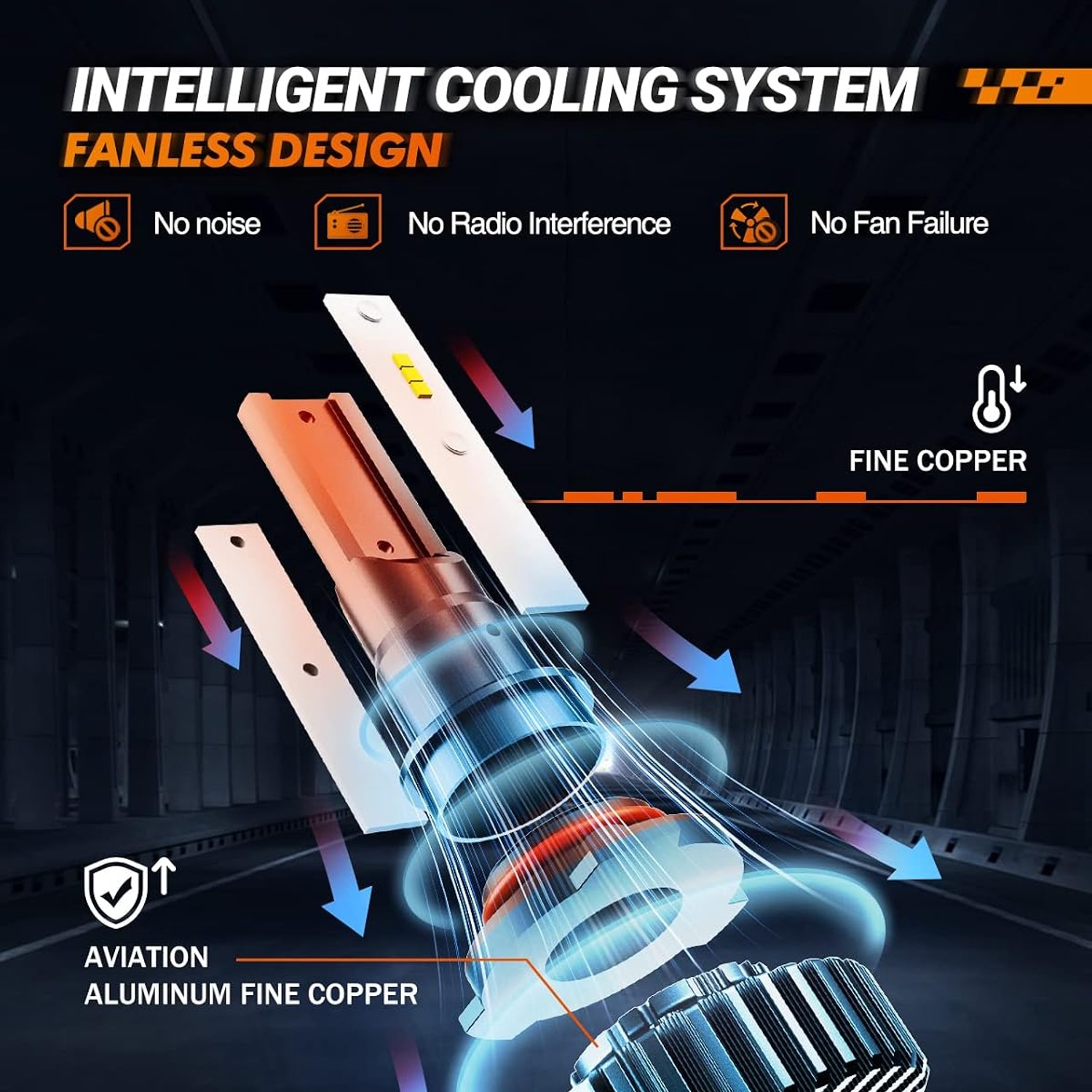
Plenty of LED headlight bulbs use a tiny fan at the back to move air across the heat sink. Fans work, but they bring a few annoyances. They can whirr. They can pick up dust and start clicking. And they add a moving part to something buried behind a sealed cap where you would rather have nothing moving at all.
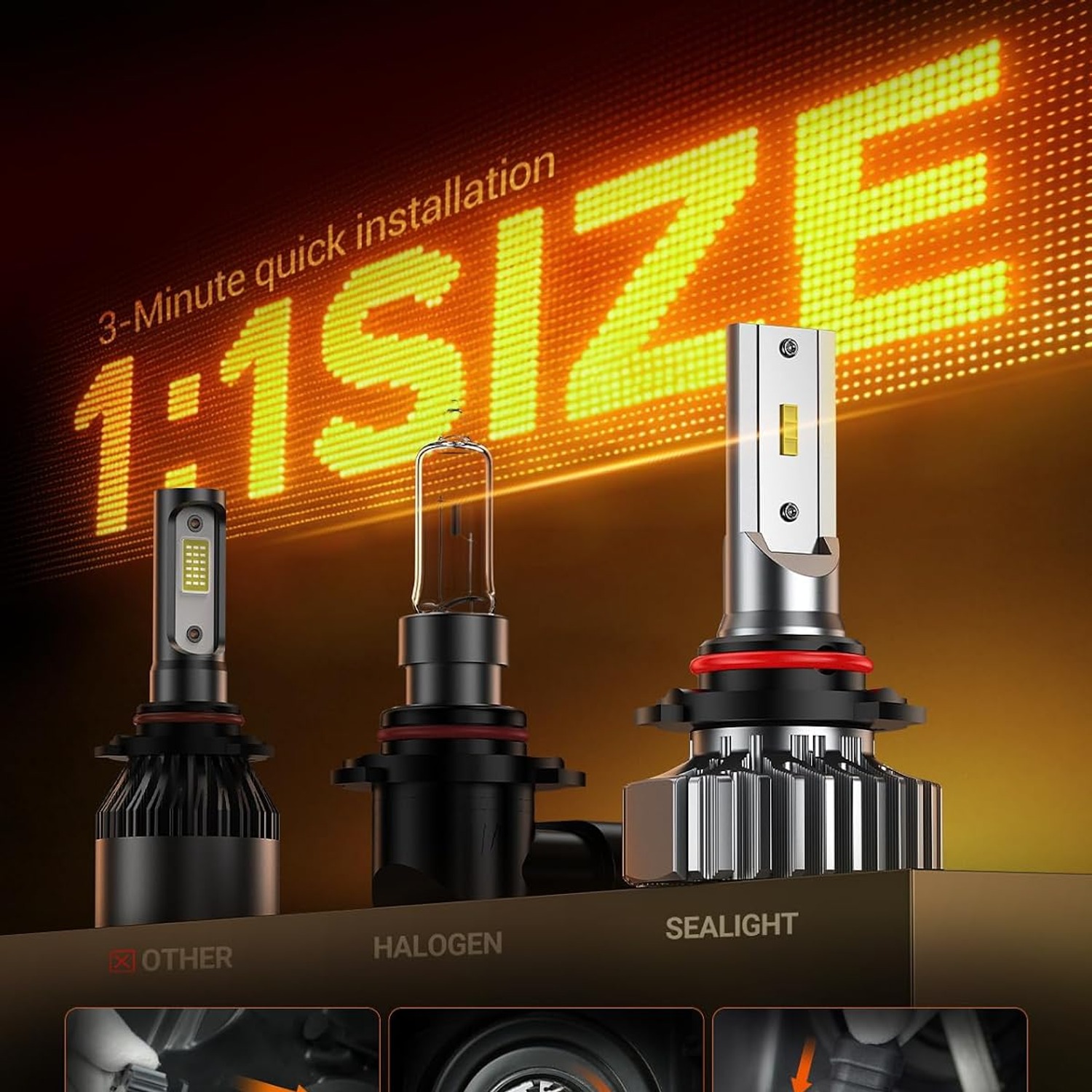
These are fanless. No fan means no fan noise and no fan to clog, and it usually means a simpler shape at the rear of the bulb, which helps when space behind the housing is tight.
The trade-off with any fanless design is that heat moves passively rather than being blown away. So when you plan the install, leave the back of the bulb a bit of breathing room. Do not jam it hard against a rubber boot, do not pack wiring tight around it, and make sure the dust cap sits properly rather than being forced on. Give it air and the design does its job.
IP68, and why it is on the box
IP ratings describe how well something resists dust and water. The first digit covers solids, the second covers liquids, and IP68 is the top end of that common scale.
Why does a bulb need that? Because headlight housings are not as sealed as people assume. Rubber boots harden. Vents collect grit. A pressure wash finds gaps that rain never did. On an off-road build, mud and spray get everywhere, and on a car that sits in a garage half the year, condensation does its own slow work.
An IP68 rating on the bulb itself means the component is rated against that kind of exposure. It is not a reason to leave a housing cracked open, but it is reassurance for a bulb that may spend its life somewhere damp.
Who this pair suits
Anyone with an HB3 fitting and an off-road, show or private-property use case. Think project builds that come out for a weekend meet, track-day cars, farm and estate vehicles, display restorations and off-road machines.
It also suits people who are fussy about matching. Because the two bulbs come together, you get a consistent colour across both sides without having to hunt for a second unit later.
The people it does not suit are equally clear. If you want bulbs for daily driving on public roads in a halogen headlight, this is not that product, and we would rather say so plainly than take the order.
The CANbus thing nobody mentions until afterwards
Modern vehicles often run a bulb-monitoring circuit. It checks the current a bulb draws to decide whether it is still alive. LED bulbs draw differently to halogens, and some vehicles read that difference as a failed bulb.
Two symptoms turn up. A bulb warning on the dash, or a flicker in the light itself. Neither means the bulb is faulty. It means the vehicle and the bulb are not speaking the same language yet.
The usual answer is a CANbus decoder, a small module wired in line with the bulb. It is not included with this set, so if your vehicle shows either symptom you would buy one separately, matched to the HB3 fitting. Many vehicles need nothing at all. You generally find out by fitting the bulbs and watching the dashboard.
Fitting them without the drama
Work cold. Headlight bulbs get hot, and a halogen that has just been running will burn you.
Open the bonnet and find the back of the headlight unit. Some cars give you a big round dust cap and plenty of elbow room. Others make you shift an airbox, a washer bottle or a battery first. Have a look before you start so you know which kind of afternoon you are having.
Unclip the connector, release the retaining clip or give the holder a quarter turn, and the old bulb comes free. Handle the new bulb by its base and heat sink rather than the emitters. Seat it, lock it, reconnect, and check it lights before you put the cap back on. Then do the other side, because a single-side install always looks wrong.
Finally, make sure the dust cap seals properly. A cap that is half on lets water and grit into the housing, and no ingress rating on a bulb makes up for a soaked reflector.
Looking after them
There is not much to it. Keep the contacts clean and dry before fitting. Wipe dust off with a dry lint-free cloth rather than a damp rag. Avoid knocking the heat sink, since it is doing the cooling work on a fanless bulb.
Beyond that, the best care is housing care. A sealed, dry headlight unit protects everything inside it. If you keep a spare pair, leave them in the packaging somewhere dry and away from anything that might crush them.
The short version
HB3 and 9005 are the same fitting, so check the code on the bulb you are removing and you will know straight away. You get two bulbs in the pack, a 6500K cool white colour, a fanless build with no fan noise, and an IP68 rating against dust and water.
Some vehicles will show a bulb warning or a flicker and may need a CANbus decoder, which is not supplied. And the point that matters most: this set is for off-road, show and private property use, not for public roads in headlights designed around halogen bulbs.
If that fits what you are building, it is a clean, tidy pair to drop in. If you are unsure about the fitting, read the base of your old bulb and ask us before you order.