
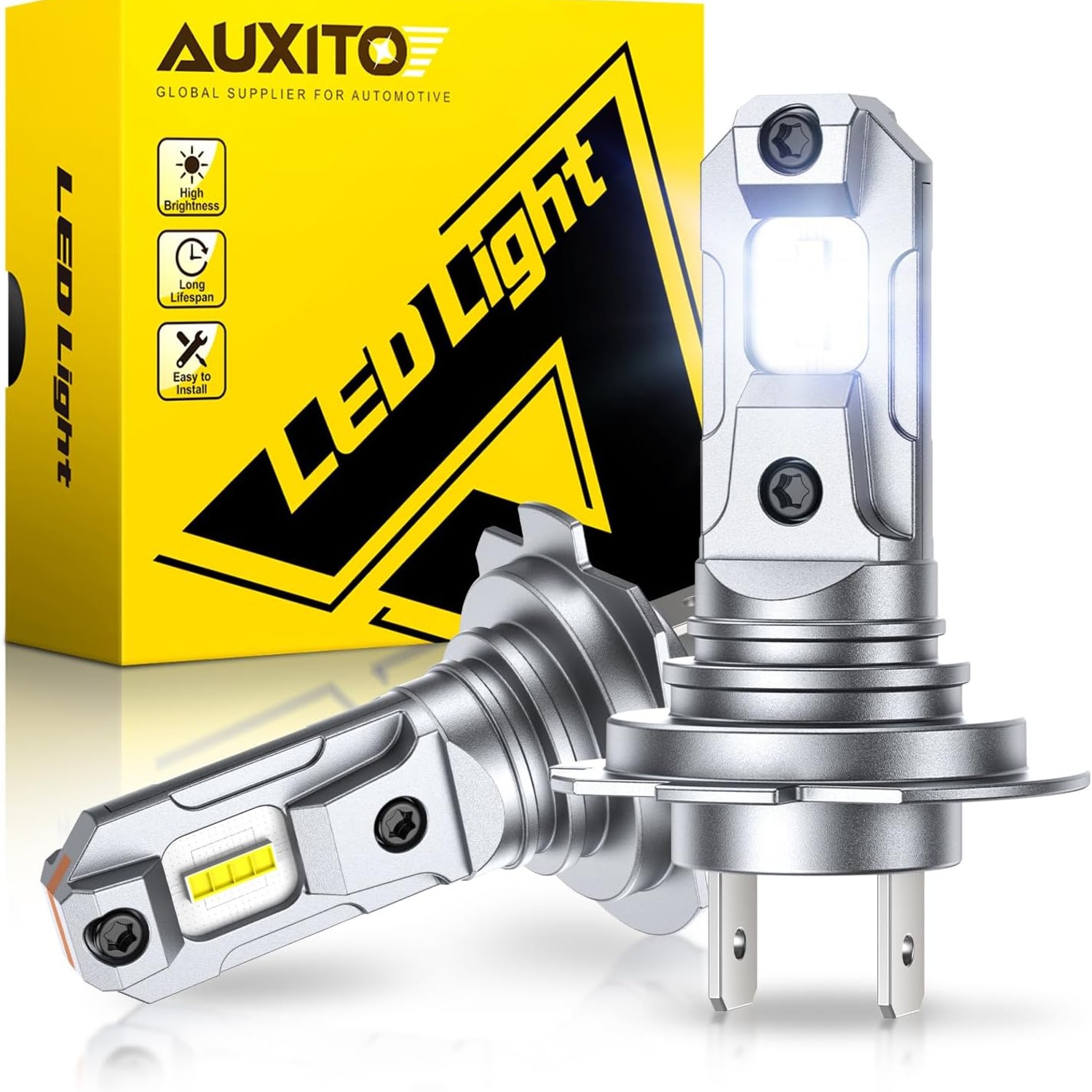
The complete guide
Buying H7 LED Headlight Bulbs - A Practical Guide
The problem with the bulb that came in the car
Halogen bulbs do a straightforward job. They heat a filament until it glows, and the light they throw is warm and slightly yellow. For a daily car on a public road, that is the setup the lamp was designed around and it is the setup that belongs there.
Project cars are a different story. If you are building a track car, finishing a show vehicle or running something that only ever moves on private land, the look of the front end matters, and a warm yellow bulb next to clean white paint and crisp LED daytime running strips can look dated. That is where a set of H7 LED headlight bulbs comes in.
Let us be clear about the limit before anything else, because it shapes every other decision here. In the United Kingdom, fitting LED bulbs into headlights built for halogen bulbs is generally not permitted on public roads. This set is sold for off-road, show and private property use. If the vehicle goes on the road with halogen headlamps, keep the halogen bulbs in them.
What an H7 LED bulb actually is
The H7 part is just the fitting. It describes the shape of the base, the keyed tab that stops the bulb going in crooked, and the three-pin connector that feeds it. H7 is a single-filament type, so a car using it normally has separate bulbs for dipped and main beam, or a projector unit with a shutter.
The LED part is the light source. Instead of a filament, there are LED chips mounted on a carrier, with a body behind the base to move heat away. That body is why an LED bulb is not always the same physical shape as the halogen it replaces, and it is the single most common reason a conversion turns awkward.
The set here is a pair. Two bulbs, so both sides change at once. That is the sensible way to do it. One LED and one halogen gives you two different colours of light, which looks worse than leaving both halogens alone.
Reading the numbers
Two figures come with this set, and they are worth understanding properly.
6500K is the colour temperature. It is a description of the tone of the light, nothing else. At 6500K you get a cool white with a hint of blue in it, which is the look most people are after when they go searching for 6500k led bulbs. Lower numbers run warmer and more yellow. A colour temperature figure says nothing about quantity of light, so do not read it as a performance claim.
IP68 is the ingress rating. The first digit covers solid matter such as dust, the second covers water, and 6 and 8 are the top bands on this scale. Inside a headlamp that is genuinely useful. A lamp housing heats up, cools down, pulls in damp air through old seals and generally lives a harder life than people assume. A sealed bulb body copes with that better than an open one. It does not excuse a cracked lens or a missing dust cover, though. Those still need to be right.
Checking the fitting before you order
This is the step people skip, and it is the one that causes most returns.
Open the bonnet and look at the back of the headlamp. Take off the dust cover and look at the base of the bulb that is in there. An H7 base is flat with two small tabs at the sides and a keyway that only lines up one way. If what you are looking at has three tabs and a bigger body, you are probably looking at an H4, which is a twin-filament bulb and will not take this set.
The handbook also lists bulb types, usually in the maintenance section. Between the handbook and a look at the actual bulb, you will know within a minute. If you are still unsure, photograph the base and send it over.
Space is the second check. Measure, or at least eyeball, how much clearance sits behind the lamp once the dust cover is off. LED bulbs carry a heat sink or driver body behind the base, and some engine bays simply do not leave room for it without modifying the cover. Doing that check before you order saves a lot of annoyance.
Electrical behaviour and decoders
Modern cars often watch their own bulbs. The system sends a small current through the circuit, measures what comes back and decides whether a bulb is present and working. A filament bulb gives the expected reading. An LED bulb draws differently, and some vehicles read that as a fault.
What you see is either a bulb warning light on the dash, or flicker, or both. It is not a sign the bulbs are faulty. It is the car's monitoring system not recognising what is plugged in.
The usual answer is a CANbus decoder, a small module that sits in line with the bulb and presents a load the car accepts. One is not included with this set. Plenty of vehicles never need one, and some always do, so the practical approach is to fit the bulbs first and see what the dash does. If a warning appears, add a decoder.
Fitting the bulbs without drama
Work on a cold car. A headlamp that has been running will be hot enough to catch you out.
Switch off the ignition, pop the bonnet and find the back of the lamp. Remove the dust cover, which is usually a rubber boot or a twist-off plastic cap. Unplug the connector, release the wire retaining clip and lift the old bulb out. Keep the clip somewhere it cannot drop into the engine bay, because they are small and fond of hiding.
Hold the new bulb by the base. Line the key tab up with the slot, seat it flat against the holder, close the clip and plug the connector back on. If the bulb body allows rotation within the base, set it so the LED chips sit horizontally, matching how a filament would have been oriented. Refit the dust cover properly, because a cover that is not seated lets damp straight in. Then do the other side.
Switch the lights on and check both sides before you close the bonnet. That is the moment you find out whether your car wants a decoder.
Who this set suits
Track day cars are the obvious one. Show builds come next, where the front of the car is on display and a cool white bulb reads better than a warm one in photographs. Off-road vehicles and anything kept and used on private property also fit the picture.
Anyone looking for the best off road led bulbs for a project will recognise the trade-off here. You get the look and the sealed construction, and you accept that the set stays off public roads in a halogen headlamp.
Looking after them
There is not much to do. Keep the dust covers properly fitted so the housing stays sealed. If you have the lamp apart for any other reason, glance at the connector for corrosion, especially on an older car. Wipe the body with a dry lint-free cloth if it needs it, and keep solvents away from it.
Handle them by the base whenever you touch them. Store a spare in its packaging somewhere dry rather than loose in a toolbox, where it will get knocked about.
The short version
This is a pair of H7 LED headlight bulbs at 6500K with an IP68 rating. Check that your lamp takes an H7 bulb and that there is room behind it for the bulb body. Expect the possibility of a dash warning or flicker, and plan for a CANbus decoder if your vehicle needs one, since it is not included.
Most importantly, remember what these are for. Off-road, show and private property use. In the United Kingdom, LED bulbs in headlights built for halogen bulbs are generally not permitted on public roads, and that applies to this set too. Fit them to the car that stays off the road, and they do exactly what you want them to.