
The complete guide
H1 LED Headlight Bulbs - A Straightforward Buyer's Guide
The problem this solves
You have a project car, a show vehicle or an off-road build, and the lighting looks dated. The bulbs throw a yellow, slightly tired colour that does not match anything else on the car. You want that clean white look, and you want both sides to match.
That is where a pack of H1 LED bulbs comes in. Two bulbs, one fitting type, one colour. No guessing which side you changed last winter.
Before anything else, there is a point that needs saying plainly. In the United Kingdom, fitting LED bulbs into headlights built for halogen bulbs is generally not permitted on public roads. This set is sold for off-road, show and private property use. If your car is driven on the road and has halogen headlight units, these bulbs are not the right purchase. That is not a disclaimer buried at the bottom of a page, it is the main thing to decide before you spend anything.
What an H1 LED bulb actually is
It describes the shape of the base and how the bulb locates in the lamp. It is a single-filament style fitting, which means it does one job in one lamp rather than switching between dipped and main beam the way some other fittings do.
Because of that, H1 bulbs turn up in all sorts of places. Main beam units. Dipped beam units on cars that use separate lamps for each. Fog lamps. Auxiliary spot lamps bolted to a bumper or a roof bar. The fitting is common, which is exactly why there is so much choice in H1 LED bulbs.
The LED part refers to the light source. Instead of a filament glowing inside a glass envelope, you get LED chips on a board. The base keeps the same H1 shape so it drops into the same locating point, which is what makes it a conversion bulb rather than a complete lamp replacement.
Why colour temperature matters
This set is 6500K. Kelvin is a measure of colour, not output. Low numbers look warm and yellow. High numbers look cool and blue-white. Halogen bulbs usually sit well below this figure, which is why they read as yellow next to anything modern.
At 6500K you get a cool white. It is the tone most people picture when they think of a contemporary car. On a show build it tends to tie in with white or silver paint, polished metal and modern trim far better than a yellow bulb does.
It is worth being honest that colour is a preference, not a performance figure. Some people like the warmer look on a classic car and deliberately keep it. If you are chasing a period-correct feel, a cool white bulb may fight with the rest of the car rather than suit it.
Checking the fitting before you order
This is the step people skip, and it is the step that causes almost every return.
Open the bonnet, find the back of the lamp, and remove the dust cap. Release the bulb from its clip or ring and pull it out. On the base you will find a marking, and it will say something like H1, H3, H4, H7 or HB3. If it does not say H1, these bulbs will not fit that lamp, no matter how similar they look from across the garage.
Two more things to check while you have the bulb in your hand. First, measure the space behind the lamp. Conversion bulbs are a different shape to the bulb they replace, and a deep dust cap or a tight engine bay can cause a clearance problem. Second, look at how the bulb is held. If the locating clip is awkward or corroded, deal with that before you start, not halfway through.
Who this suits
Project car owners get the most out of a set like this. A car that is being rebuilt, trailered to events or kept on private land is exactly the environment this product is sold for.
Show vehicles are the other obvious fit. Static displays live and die on detail, and matching h1 led conversion bulbs on both sides read as deliberate rather than accidental.
Off-road builds work too, particularly where auxiliary lamps use the H1 fitting. Green laning vehicles, competition cars and farm or site vehicles that never touch a public road are all within the use this set is intended for.
Who it does not suit is simpler. If the car is your daily driver on public roads and the headlights were built for halogen bulbs, this is the wrong product and no amount of wanting it to work changes that.
The CANbus question
Modern vehicles often watch the current flowing through each lighting circuit. It is a sensible system, designed to tell you when a bulb has failed. The trouble is that it was designed around a filament bulb, and an LED bulb behaves differently on that circuit.
The result is that some vehicles will show a bulb warning on the dash even though the bulb is working perfectly, or produce a flicker in the lamp. This is not a universal behaviour. Plenty of vehicles never do it at all, and older vehicles with simple wiring usually do not have the monitoring in the first place.
Where it does happen, a CANbus decoder is the normal answer. It is a small module that fits in line between the vehicle wiring and the bulb. A decoder is not included with this set, so if you know your vehicle is fussy about bulb monitoring, budget for one separately.
Fitting and care
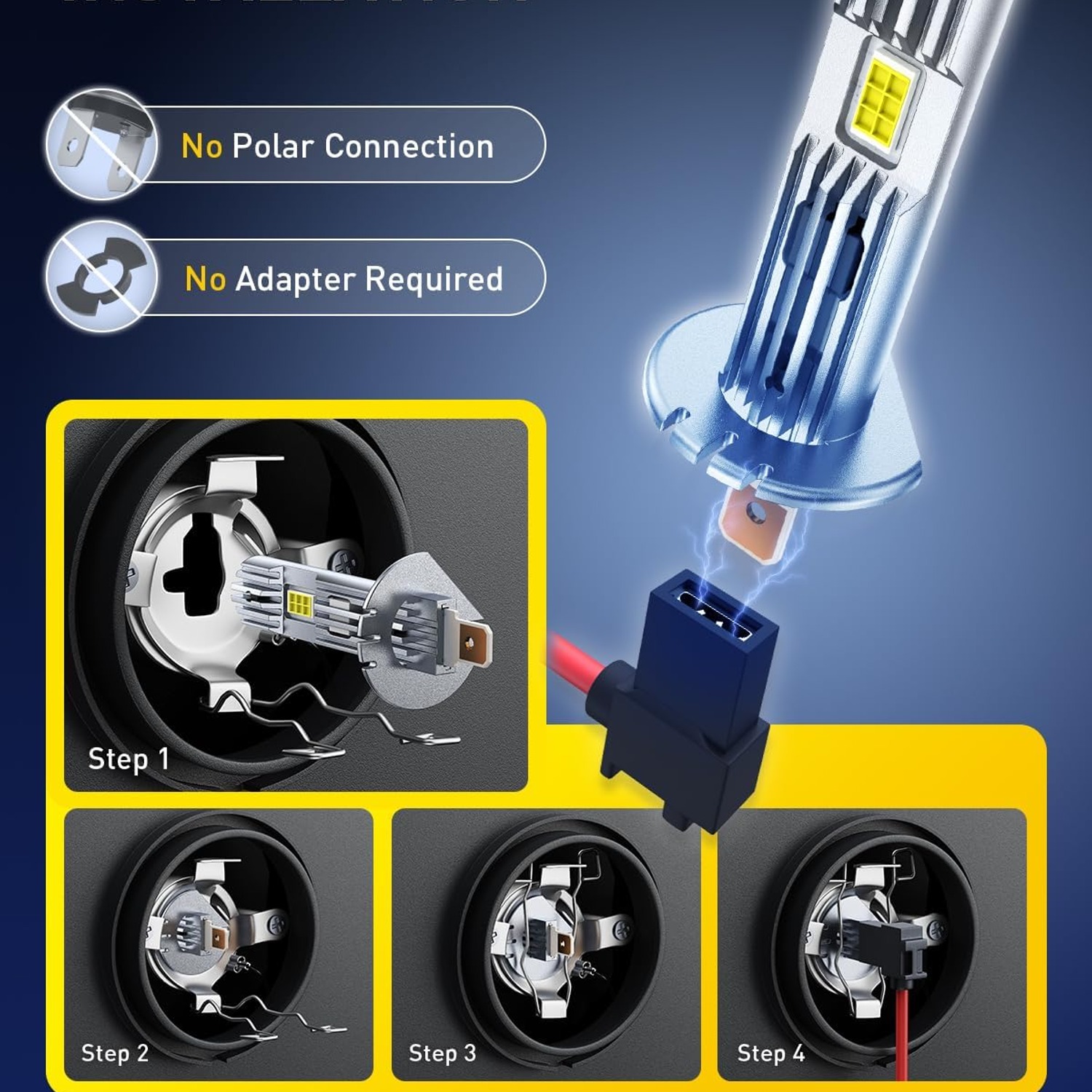
The job itself is usually quick. Ignition off, let everything cool, release the dust cap, unclip the old bulb, fit the new one, clip it down, refit the cap. The access is normally the hard part rather than the bulb, and on some cars a wheel arch liner or a battery tray has to move first.
Handle the bulbs by the base. Keep your fingers off the lens and the LED chips. Make sure each bulb seats fully and squarely, because a bulb sitting at an angle is immediately visible from the front of the car.
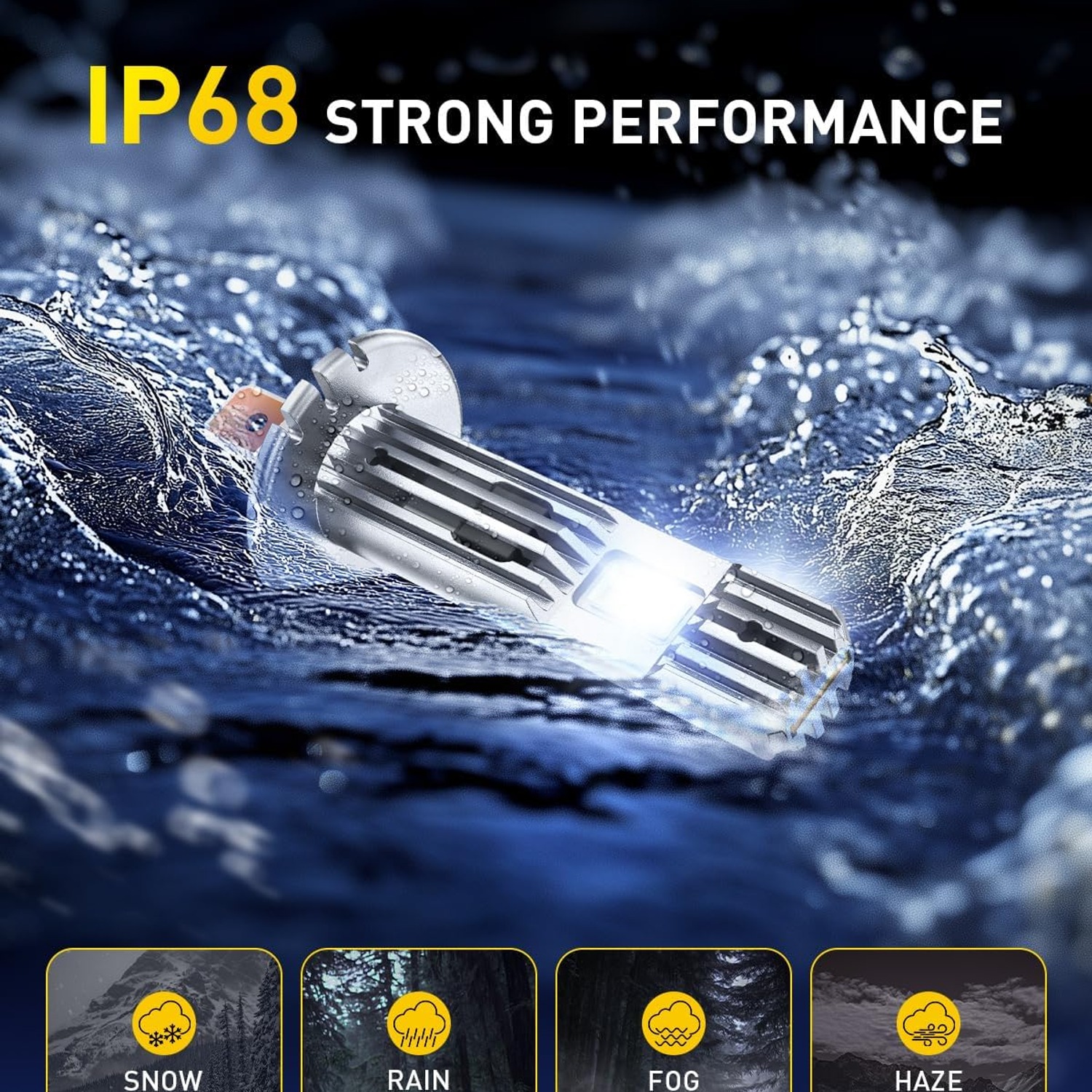
Looking after them is mostly about keeping moisture out. Reseat the dust cap properly and check the housing seal is intact and sitting in its groove. If you ever need to clean the base, a dry lint-free cloth is enough. No solvents, no water, nothing wet near the electronics.
Store any spares base down in a dry box rather than loose in a boot where they can take knocks.
How to compare options
Set the brightness marketing aside and look at four practical things.
Fitting first, always. Then the colour, because that is the thing you will actually look at every time you open the garage. Then the physical shape and whether it will clear your dust cap. Then whether you will need a decoder for your vehicle.
A pack of two is worth paying attention to as well. Buying singles to save a little often means fitting them months apart, which is how you end up with one side looking slightly different to the other. Buying the pair keeps the job to one afternoon.
The short version
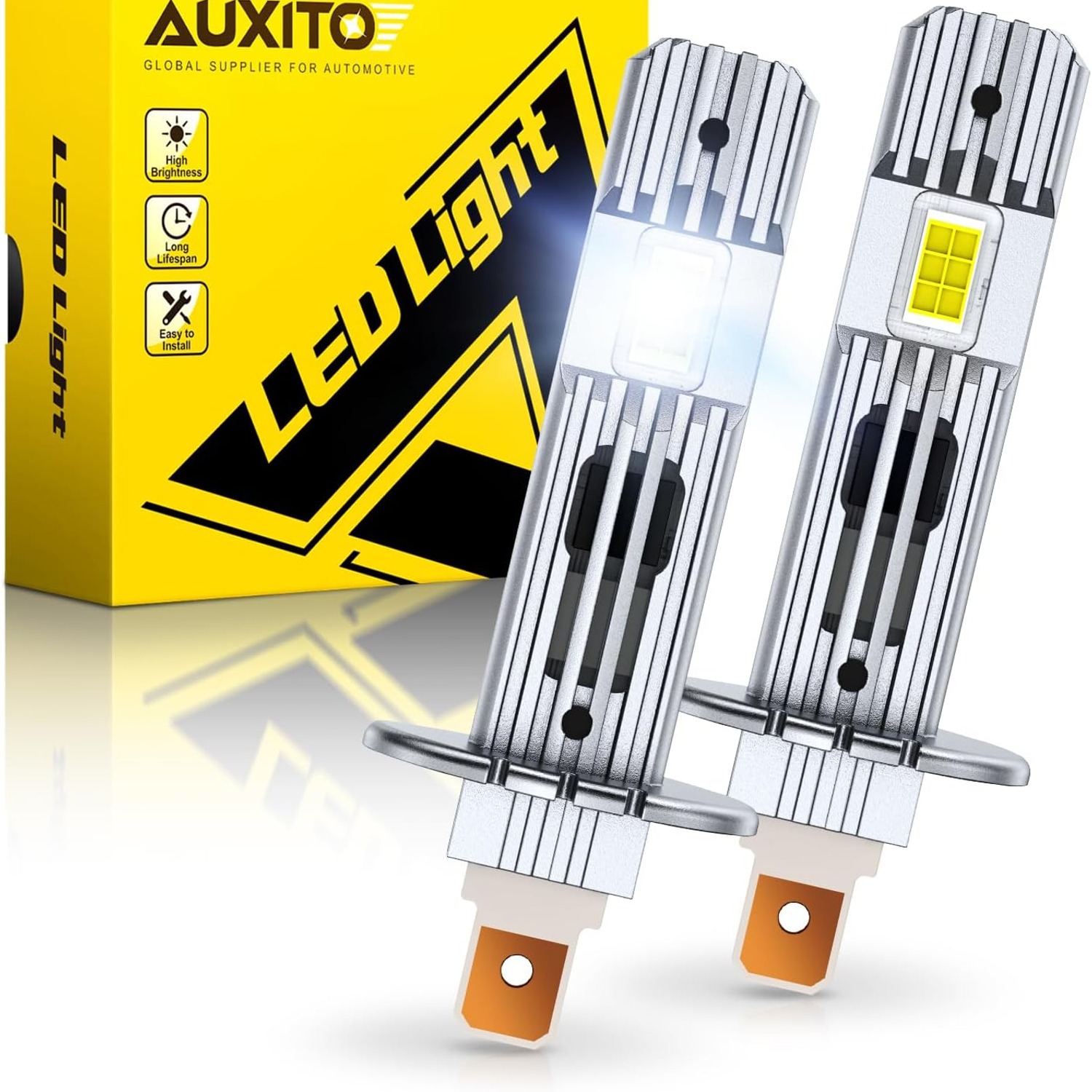
This is a pack of two H1 LED bulbs with a 6500K cool white colour, sold as an H1 LED conversion kit. The fitting is H1 and that is the only compatibility point to go on, so check the marking on your existing bulb before ordering.
It is sold for off-road, show and private property use. In the United Kingdom, fitting LED bulbs into headlights built for halogen bulbs is generally not permitted on public roads.
Some vehicles will show a bulb warning or a flicker once LED bulbs are fitted, and may need a CANbus decoder, which is not supplied with this set. If your lamp takes H1, you have the clearance, and the vehicle is used off road or on display, this is a simple way to get a clean, matched white look at the front.